Five case studies covering the problem, approach, personal contribution, tools, and outcomes behind each project.
01 · Singapore Post · 2026
Self-Service Kiosk Reliability
Designed and deployed a PowerShell watchdog that monitors kiosk applications, recovers failures, controls restart flapping, and keeps operational logs across UAT and live postal outlets.
Challenge
A kiosk application could stop responding during operation, leaving the terminal unavailable until someone intervened. Recovery had to work reliably on restricted Windows machines and remain supportable.
Approach
Converted failure modes into monitoring, recovery, logging, and rollback requirements.
Built a one-shot PowerShell monitor launched every minute through Task Scheduler.
Added anti-flapping, health logs, hidden execution, state tracking, and retention.
Validated the package in UAT before rollout support.
Contribution
PowerShell health checks and restart logic
Task Scheduler and VBScript deployment
UAT, documentation, rollback planning, and knowledge transfer
Outcome
Reduced reliance on manual observation.
Created a repeatable engineering support package.
Progressed from UAT to operational rollout at multiple outlets.
PowerShell · Systems Reliability · UAT · Task Scheduler
02 · Singapore Post · 2026
Autonomous Logistics Movement
Developed AGV and AMR concepts for moving roll cages across indoor, ramp, and road environments while accounting for safety, routing, and operations.
Challenge
The system needed to move roll cages between levels through constrained lanes, ramps, roads, traffic interactions, and output-chute operations without modifying the cages.
Approach
Mapped the current flow and collected site measurements.
Compared indoor staging and outdoor-road concepts.
Defined requirements for under-riding, towing, and forklift-style robots.
Used concept drawings and vendor discussions to refine feasibility.
Contribution
Problem framing and constraint capture
Route concepts and system block diagrams
Robot configuration comparison
Stakeholder presentations and follow-up studies
Outcome
Narrowed the study to feasible movement concepts.
Made operational constraints visible for vendor evaluation.
Built a basis for requirements and safety review.
AMR / AGV · Systems Engineering · Logistics · Vendor Evaluation
03 · Singapore Post · 2026
Integrated Kiosk Design
Iterated three kiosk enclosure concepts from component layouts to fabrication-ready integration, covering ergonomics, access, routing, safety, and maintainability.
Challenge
Printers, a weighing scale, payment hardware, touchscreen, router, PC, and mailbox had to become one usable, safe, and serviceable self-service terminal.
Approach
Created three concepts from separated modules to full integration.
Iterated layouts around ergonomics, access, safety, and cable routing.
Produced CAD geometry, drawings, and fit studies.
Used a physical mock-up and fabricator feedback before assembly.
Contribution
Fusion 360 and SolidWorks modelling
Component packaging and service-access studies
Prototype and slot-fit testing
Fabricator coordination and documentation
Outcome
Progressed from concepts to a fabricated enclosure.
Integrated the shell and equipment into a completed assembly.
Improved maintainability through access and routing design.
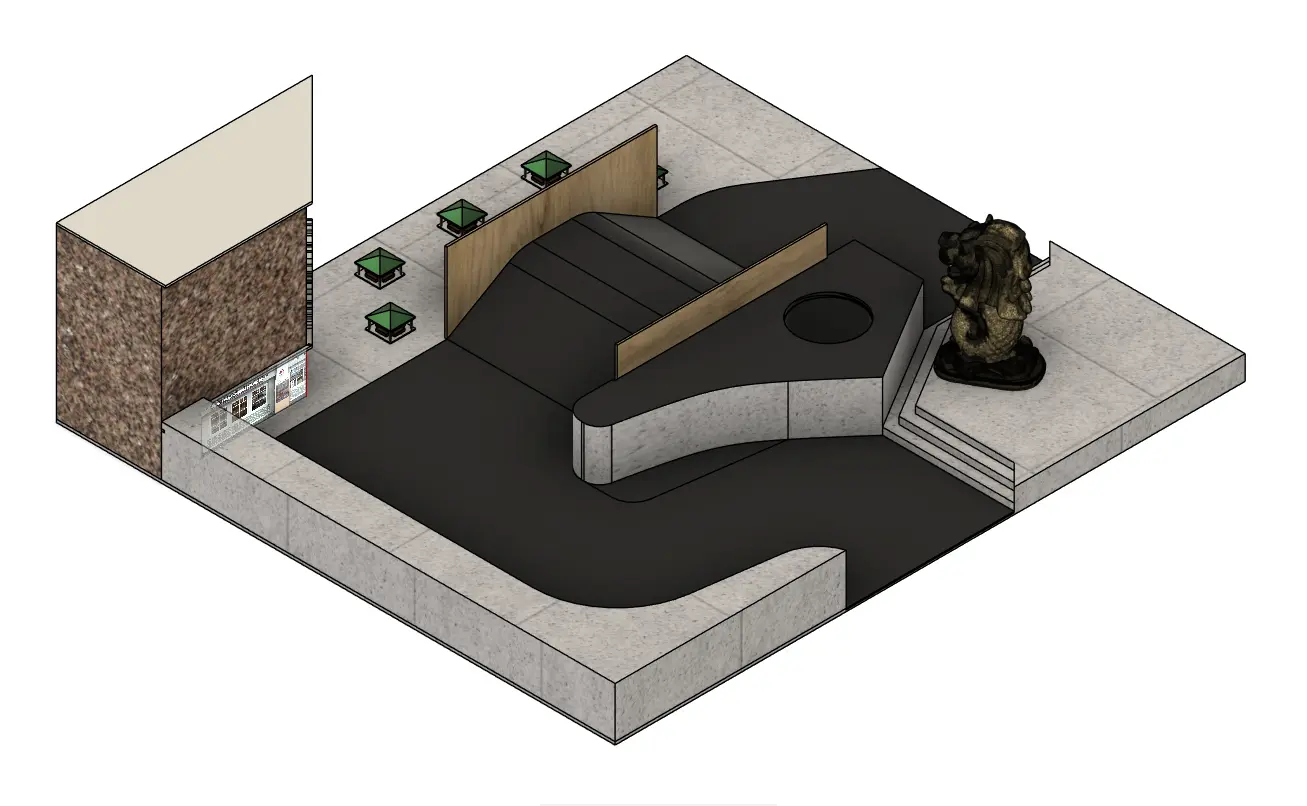
Applied the systems approach to design, fabricate, map, and navigate a Merlion Park-inspired competition arena using the AgileX LIMO mobile robot.
Challenge
Teams had to build interconnected arenas their own robot could navigate while creating obstacles for competitors, balancing challenge, feasibility, and reliable autonomy.
Approach
Translated the competition objective into arena and navigation requirements.
Iterated a Merlion Park-inspired design in Fusion 360.
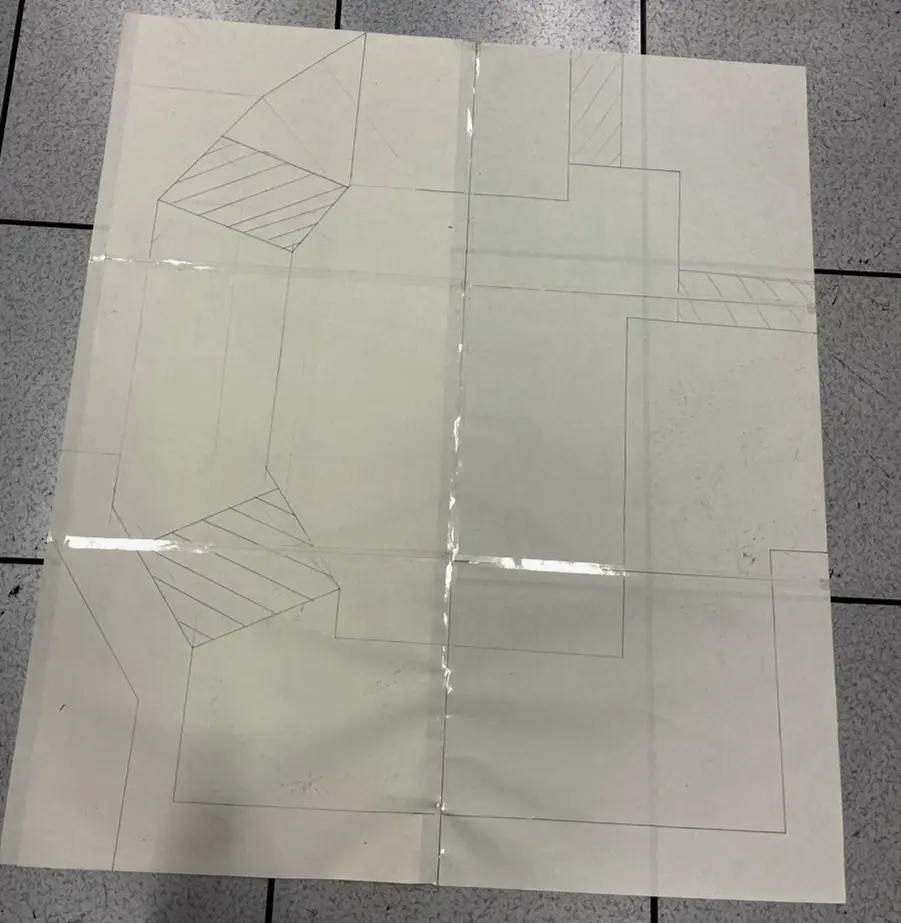
Built a dimensionally accurate mock-up to test clearances.
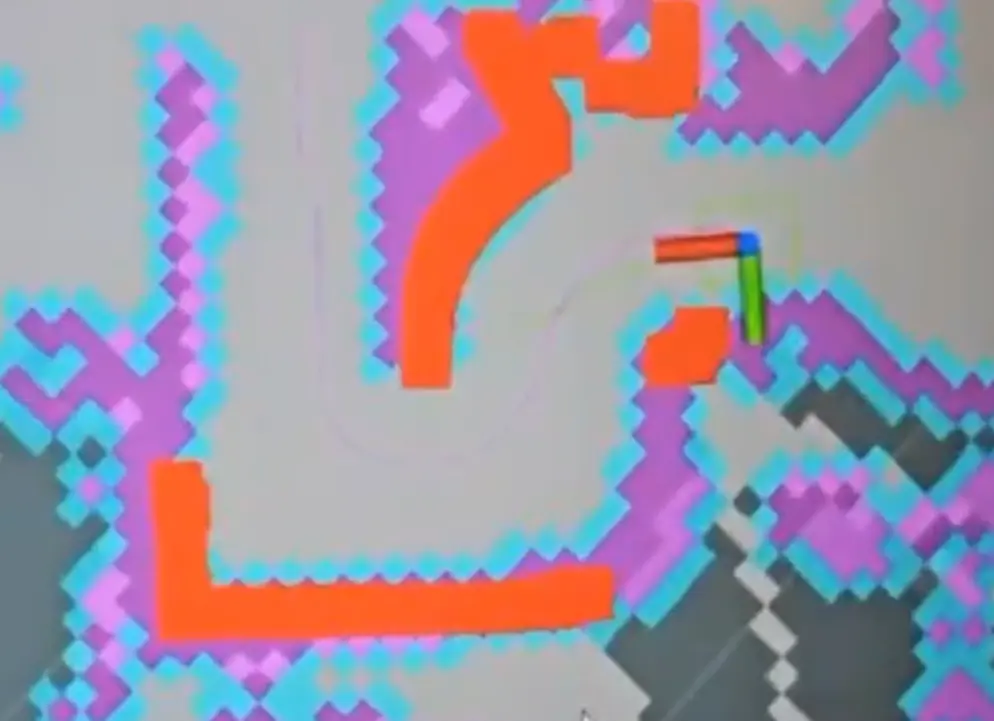
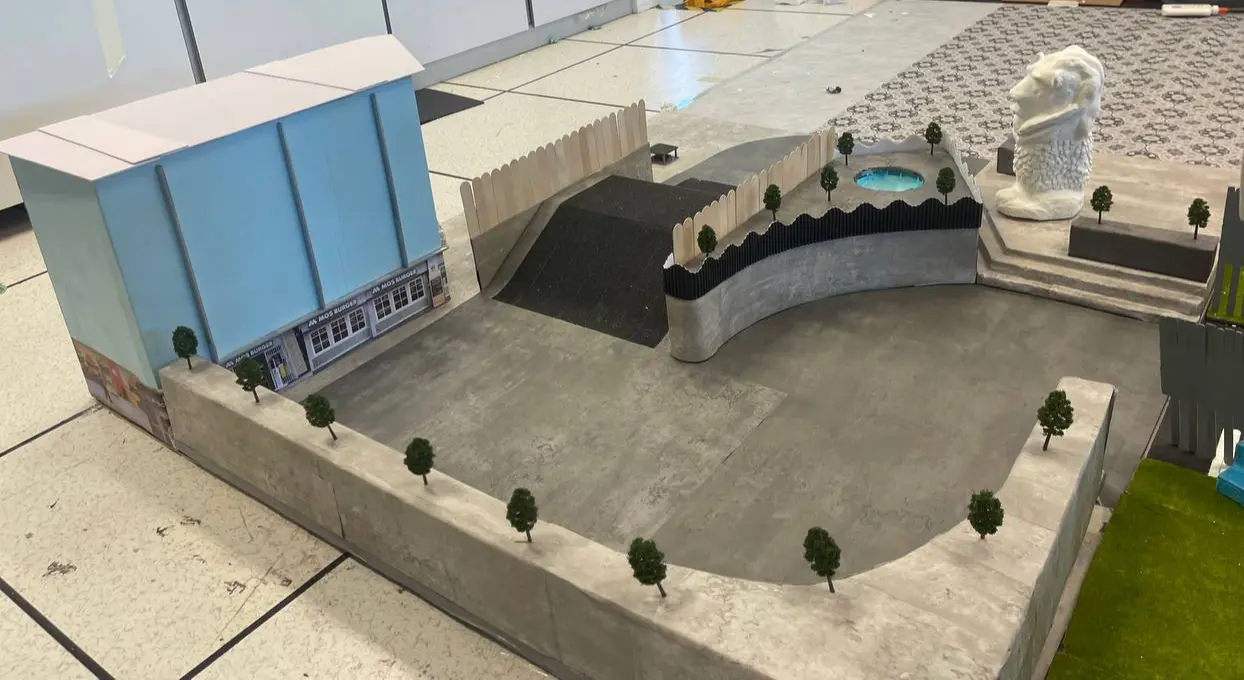
Fabricated the arena, mapped it in RViz, and tested navigation.
Contribution
Systems approach and requirements
Arena CAD and physical iteration
Mock-up and feasibility testing
ROS mapping and robot navigation
Outcome
Delivered the fabricated competition arena.
Created a usable RViz map.
Demonstrated LIMO navigation through the completed environment.
Project evidence
Arena CAD model developed from the Merlion Park concept.RViz occupancy map used for autonomous navigation testing.Full-scale mock-up used to check dimensions and robot clearance.Completed fabricated arena used for mapping and navigation trials.
ROS · AgileX LIMO · Fusion 360 · SLAM · Systems Approach
05 · SIT Systems Engineering Project 2 · 2025
InflatAssist Patient Repositioning Aid
Developed and validated a low-cost inflatable bedside system intended to help a single nurse reposition an immobile patient during clothing and diaper changes.
Challenge
Repositioning larger or bed-bound patients can require multiple nurses, creating physical strain and time pressure. Existing aids may depend on patient mobility, fixed infrastructure, or multiple products.
Approach
Selected the nursing domain through an agile comparison process.
Interviewed nurses and validated bedside needs and constraints.
Reviewed injury evidence and competing turning aids.
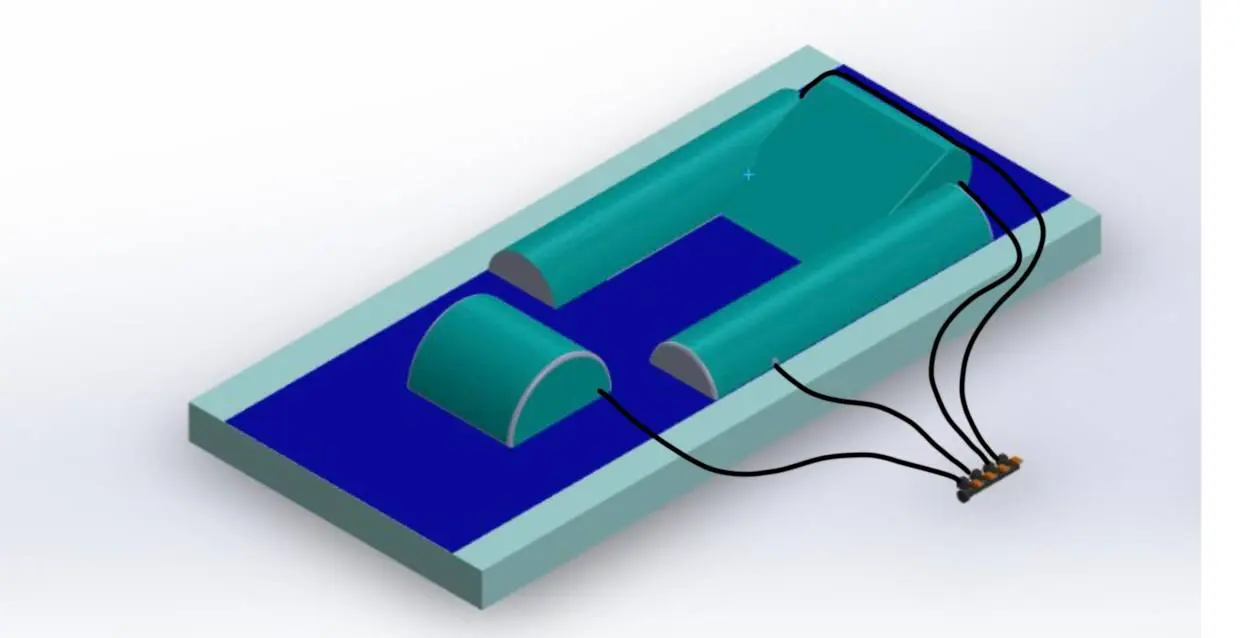
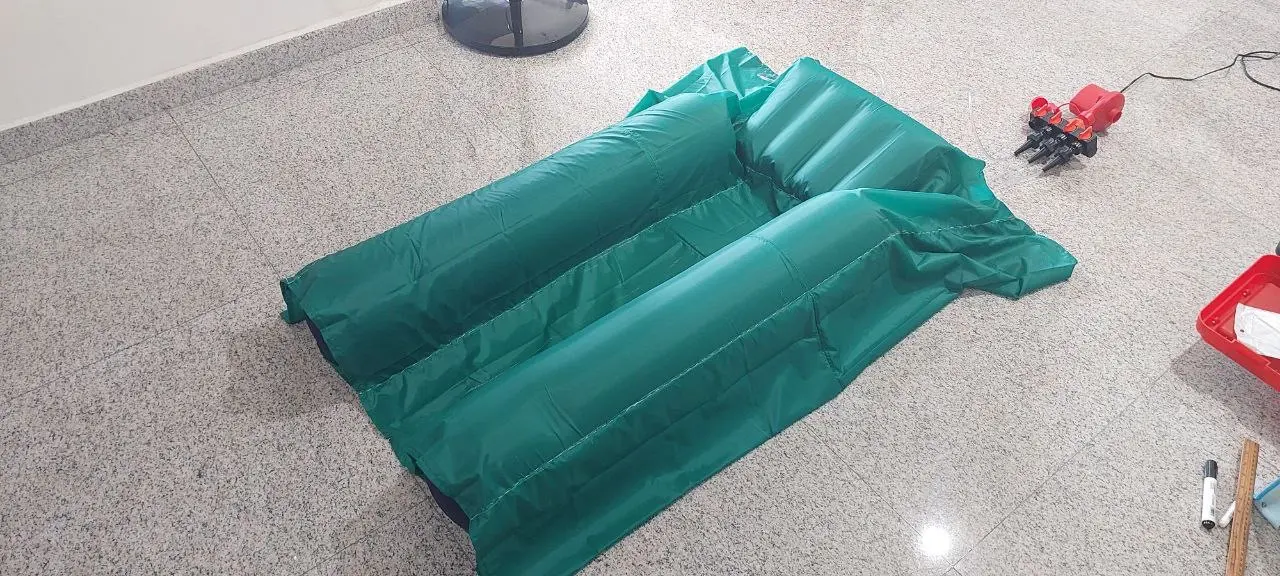
Converted needs into requirements, modelled the concept, and built the prototype.
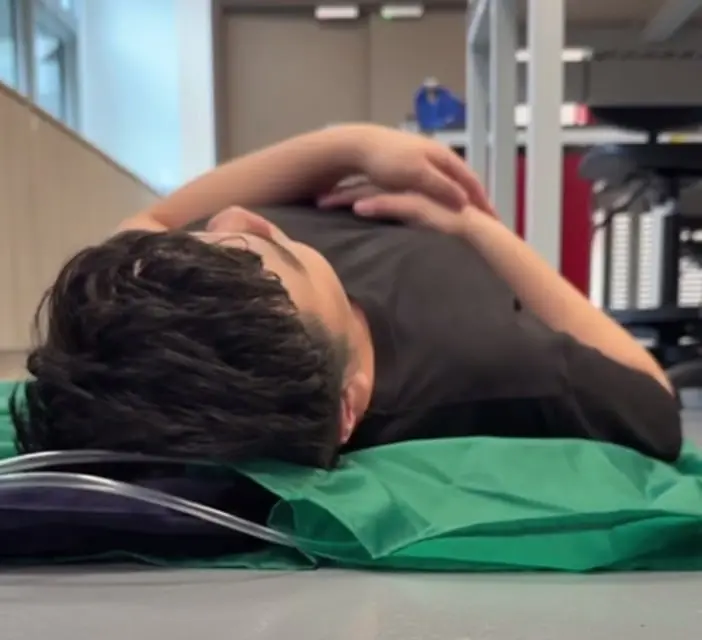
Ran hands-on stakeholder validation.
Contribution
Domain analysis and stakeholder interviews
Needs formation and market comparison
Concept and SolidWorks modelling
Prototype assembly and feedback analysis
Outcome
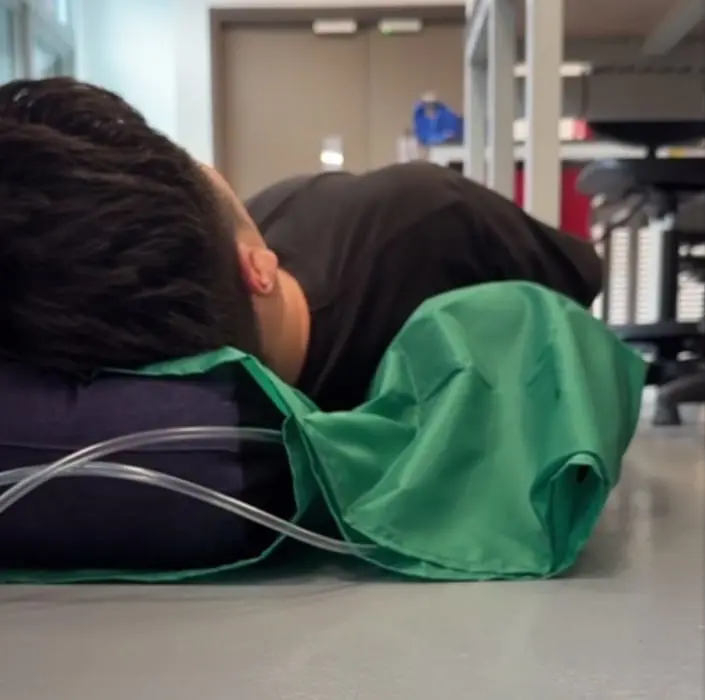
Demonstrated assisted patient rotation.
Received positive feedback on the concept.
Identified inflation time and patient movement as key improvement areas.
Defined faster pumping, higher-friction material, and automated valves as next steps.
Project evidence
SolidWorks concept used to develop the inflatable support layout.Assembled prototype with independently controlled inflatable sections.Stakeholder validation before the side support was inflated.Inflated support assisting the participant into a side-lying position.
Systems Engineering · SolidWorks · Prototyping · Stakeholder Validation